

Environment > Willpower
I used to work with Sarah [not her real name], and she used to beat herself up every evening. Not physically, but with a relentless inner voice that catalogued her daily failures. Checked Instagram during work meetings. Ate the cookies she'd hidden from herself. Skipped the gym again.
"I have zero self-control,"
she'd tell me, as if confessing to a character flaw as permanent as her eye color.
Sarah isn't alone in this self-flagellation. We live in a culture that treats self-control like a moral virtue, something decent people simply possess. Diet failed? Weak willpower. Procrastinated again? Poor discipline. Spent money you didn't have? Lack of character. We've turned behavior into biography, as if every choice reveals something essential about who we are.
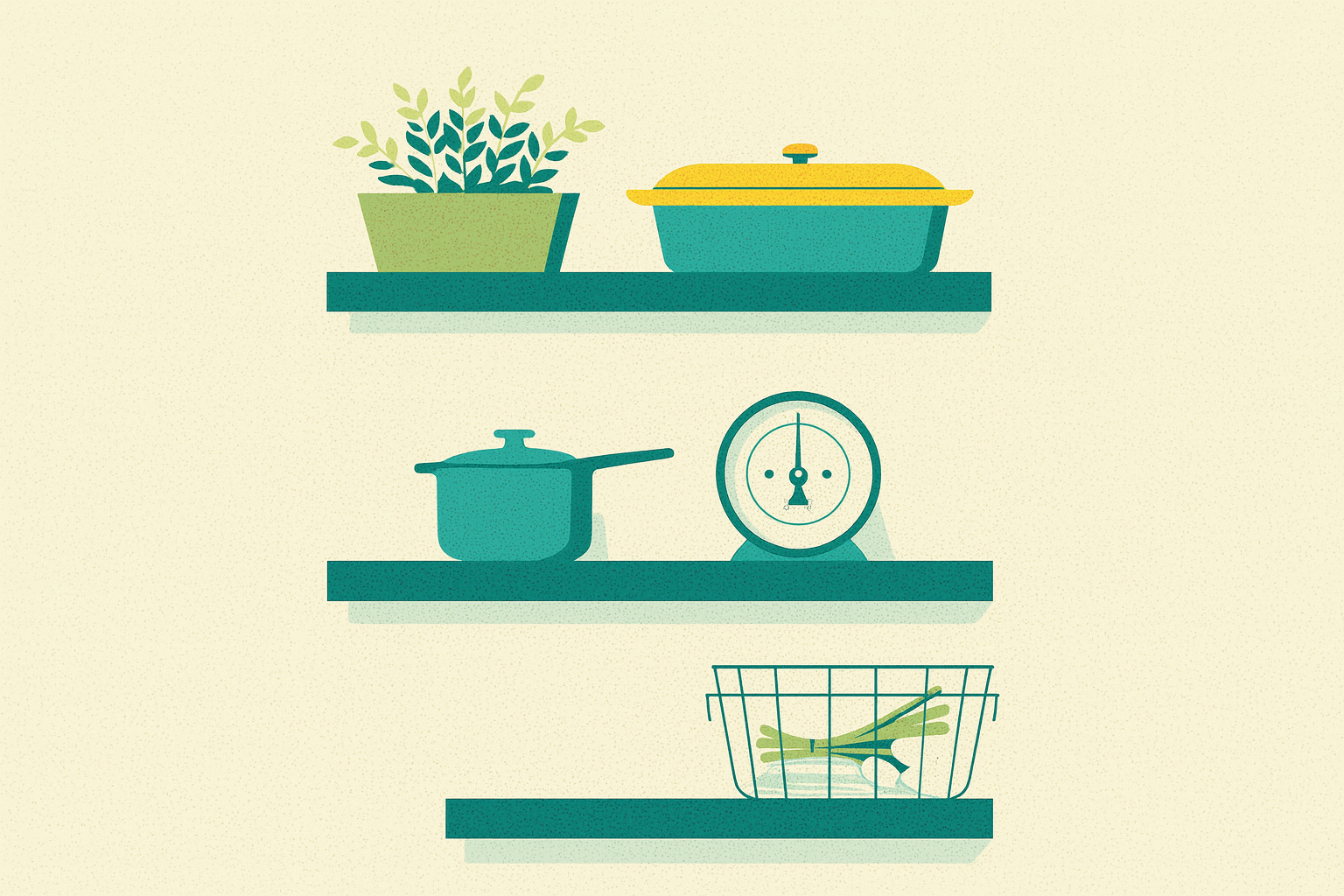
But here's what Sarah didn't know, and what most of us miss entirely: she wasn't fighting her character. She was fighting her kitchen.
James Clear, the habit formation expert whose work has reached millions, offers a perspective that flips our understanding upside down:
"Think about self-control less as the quality of a person and more as the quality of a place."
More than just clever wordplay, this is a fundamentally different way of understanding human behavior, one backed by decades of research in psychology, behavioral economics, and neuroscience. When we stop asking "Why don't I have more willpower?" and start asking "What's this environment doing to my willpower?" everything changes.
Consider the research findings that should make us question everything we think we know about self-discipline. People eat 22% more soup when given larger bowls, regardless of hunger. Students score higher on tests in rooms with natural light. Workers report better focus in spaces with plants. Credit card users spend 12-18% more than cash users on identical purchases.
None of these behaviors reflect moral character. But they do tell a profound story about environmental influence.
Supermarket Lab
Walk into any grocery store and you're entering a laboratory designed to study the limits of human self-control. Every detail has been engineered by teams of behavioral psychologists working for the food industry. The produce section greets you first not because it's convenient, but because it creates a "health halo" that makes you feel virtuous enough to indulge later. The milk lives in the back corner, forcing you past aisles of impulse purchases. Even the music tempo is carefully calibrated to slow your shopping pace and increase spending.
These stores are selling food, but they’re also designing environments that systematically erode your ability to make the choices you'd make in other contexts. And they're extraordinarily good at it.
Standing in that checkout line, surrounded by candy and magazines, struggling with your resolve, you're not revealing some personal weakness, but experiencing the predictable result of environmental design that works against your intentions. The question isn't why your willpower failed, but how it lasted as long as it did.
Attention Economy
Our screens create some of the most powerfully addictive environments ever designed. Social media platforms employ teams of neuroscientists and behavioral economists whose job is to create digital spaces that capture and hold your attention, regardless of your conscious intentions.
The infinite scroll eliminates natural stopping points. Notification systems create intermittent reinforcement schedules that mirror the psychological patterns of gambling addiction. Algorithms learn your weaknesses and serve them back to you with scientific precision. When you find yourself scrolling for hours despite having planned to check one message, you're not experiencing some deep personal failing, but the intended outcome of an environment designed to override your self-control.
Take Marcus, a product designer who battled constant Twitter checking during work hours. For months, he berated himself for his lack of discipline. Then he tried a different approach: he deleted the app from his phone and installed a browser extension limiting his Twitter time to 15 minutes daily. His productivity soared not because he suddenly developed superhuman willpower, but because he changed his digital environment to work with his psychology rather than against it.
If environments shape behavior, then designing better environments becomes our most powerful tool for change.
Physical Space
Sarah's transformation began in her kitchen. Instead of hiding cookies and hoping for the best, she stopped buying them entirely. She moved fruit to eye level in the refrigerator and pushed less healthy options to the back. She bought smaller plates, knowing research shows we eat less from smaller dishes regardless of hunger levels.
She was designing her environment to make good choices easier and poor choices harder. Within weeks, her eating habits shifted not because she'd developed more discipline, but because she'd reduced the number of decisions requiring discipline.
Context-Dependent Cues
Rachel, a writer struggling with focus, created what she calls her "writing corner." This space contains only her laptop, notebook, and lamp. No phone, no TV remote, no bills to pay. When she sits there, her brain automatically shifts into writing mode because the environment signals "this is where we write."
The power of context-dependent learning means our brains associate specific behaviors with specific environments. By creating dedicated spaces for desired activities, we tap into this psychological principle to make good habits more automatic.
Social Environment
Perhaps most powerful of all is our social context. When Mark wanted to improve his fitness, joining a running club transformed his exercise habits more than any internal motivation ever had. The scheduled meetings, social accountability, and supportive community created an environment where showing up became the path of least resistance.
We often underestimate how much our social environments influence our individual choices. The people around us don't just provide accountability; they normalize certain behaviors and make others seem unusual. If everyone in your social circle exercises regularly, not exercising starts to feel strange. If everyone checks their phones constantly during conversations, presence and attention become rare and difficult.
Understanding environmental influence also helps explain why certain situations consistently challenge our best intentions. It's not that we lack character in these moments, but that we're facing environments specifically designed to overwhelm our self-control systems.
Buffet Psychology
All-you-can-eat restaurants create perfect storms for over-consumption. The layout eliminates natural portion controls. The variety triggers novelty-seeking behaviors. The "unlimited" framing shifts our mindset from "what do I need?" to "what can I get?" Large plates make normal portions look small. Even the social dynamics encourage excess, as taking less might seem wasteful or antisocial.
The Casino Model
Casinos represent perhaps the most sophisticated environmental manipulation of human behavior. No clocks or windows eliminate time awareness. Free drinks impair judgment. Maze-like layouts make exits hard to find. Near-miss experiences on slot machines create powerful psychological hooks. The constant sensory stimulation overwhelms rational decision-making.
Many online environments now use similar principles. Social media notifications interrupt focus and create artificial urgency. Shopping websites use scarcity messaging and time-limited offers. Streaming platforms automatically play the next episode, eliminating natural stopping points.
While personal environment design is powerful, we should also consider systemic changes. How might we design classrooms that naturally enhance student focus rather than requiring constant discipline? What would office spaces that promote deep work look like? How could public policies create environments supporting collective well-being?
The environmental view of self-control moves us beyond individual blame toward designing systems that work with human psychology. This is less about removing personal responsibility and more about creating conditions where responsible choices become easier and more natural.
There's something profoundly liberating about re-framing self-control as environmental rather than purely personal. It frees us from cycles of self-blame when willpower inevitably falters. It provides practical tools beyond simply "trying harder." Most importantly, it helps us design lives that work with our human nature rather than constantly fighting against it.
This doesn't mean character and internal discipline become irrelevant. The ideal approach combines environmental design with personal development, recognizing that both matter but environments often matter more than we realize.
So, start with an environmental audit. Which spaces, digital tools, and social contexts support your goals? Which undermine them? Choose one small change at a time. Remove friction from desired behaviors and add it to undesired ones. Create positive environmental triggers that prompt good habits automatically.
When facing challenging environments you can't control, prepare strategies in advance. Sometimes the most powerful act of self-control is simply avoiding environments that require too much self-control to begin with.
Sarah's story has a different ending now. Her kitchen supports her health goals. Her workspace eliminates digital distractions. Her social circle includes people pursuing similar values. She still faces moments requiring discipline and choice, but far fewer of them. Most importantly, she's stopped telling herself she lacks self-control. Instead, she's become an architect of her own behavior.
The next time you find yourself struggling with willpower, try shifting the question. Instead of "What's wrong with me?" ask "What's wrong with this environment, and how can I change it?"
Because the truth is, self-control isn't really about control at all. It's about design. And design, unlike character, is something we can actually change.
The way my stomach fell reading the word “liberating” is hard to describe.
Your portrayal of predictable behavior in perfectly designed environments where choice becomes irrelevant is hell. To design systems in which we are ‘nudged’ to act, in a way that can be manipulated, but show no evidence of such manipulation, only choices afterwards….
Pretty subversive way to sell determinism, don’t you think?