Beta glucan isn’t sexy. It’s not flashy. It doesn’t come with Instagram reels or motivational mantras. It’s just a humble soluble fiber found in oats, barley, mushrooms, and yeast that quietly modifies immune signaling, supports cardiovascular health, and occasionally sneaks into cancer research.
If you're building a supplement stack that favors robustness over loud gimmicks, beta glucan might deserve a spot.
This supplement is one part of my broader evidence-based stack. If you’d like to see how all the pieces fit together, and how I rank them by research strength, you can explore the full list here.
Oat- and barley-derived beta glucan consistently lower LDL by 5–10%, particularly when consumed daily (~3g/day).
Works by binding bile acids and reducing cholesterol re-absorption in the gut.
Bottom line: One of the few non-drug interventions with clinically meaningful cholesterol reduction and no side effects.
Claim 3: Beta Glucan May Support Anti-Cancer Immunity
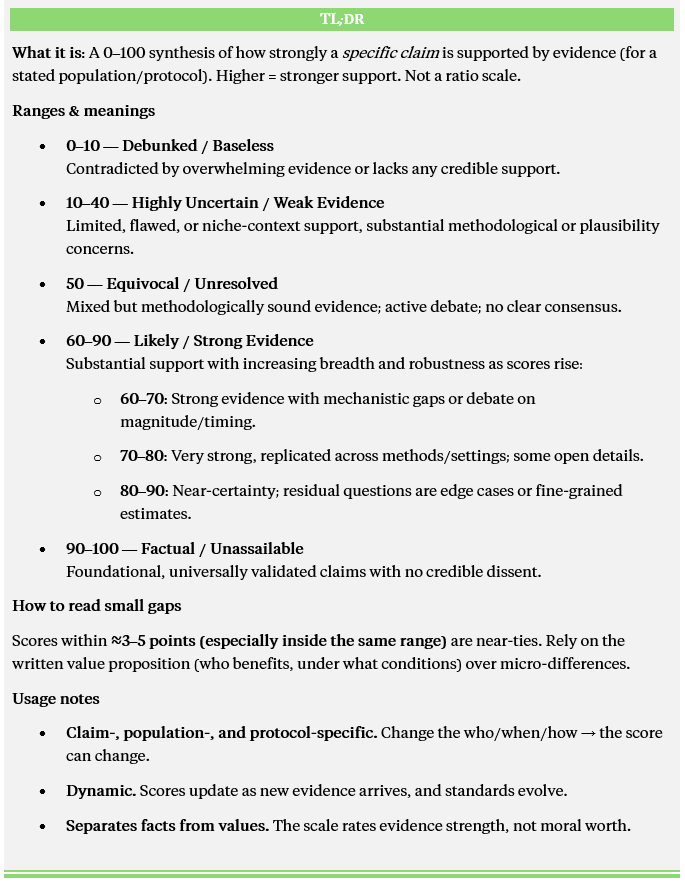
ETCS Score: 60/100 (Equivocal/Promising but Early)
Animal models and early-stage human trials suggest beta glucan may enhance immune surveillance of tumors and improve responses to certain immunotherapies.
Currently being studied as an adjunct in cancer treatment (not a primary intervention).
Bottom line: Potentially exciting, but not ready for clinical prime time outside of very specific contexts.
Claim 4: Beta Glucan Improves Gut Health and Satiety
ETCS Score: 65/100 (Moderate-to-Strong Evidence)
Increases viscosity in the gut, slows glucose absorption, and feeds beneficial gut bacteria.
May improve glycemic response and reduce post-meal insulin spikes.
Also contributes to satiety, which may help with weight regulation.
Bottom line: It’s not a probiotic, but it makes the terrain friendlier.
Claim 5: Beta Glucan is Safe for Long-Term Use
ETCS Score: 90/100 (Near-Certain Evidence)
Found in common foods like oats and mushrooms.
Supplemental forms (1,3/1,6 and 1,3/1,4 beta glucans) are well-tolerated with minimal side effects. I take one of these every day.
No known toxicity.
Bottom line: If there’s a supplement that could sneak into everyone’s regimen, it’s this one.
Final Verdict
Is Beta Glucan worth taking? If you want better cholesterol numbers, a calmer immune system, and a gut that knows what it’s doing, then yes. It won’t change your life in 48 hours, but it might keep you off antibiotics, out of statin conversations, and in better shape five years from now.
Final ETCS Score for Beta Glucan: 78/100 Strong evidence. Low risk. Zero drama.
Here’s a quick ETCS breakdown → full explanation here. Hat tip to George Michaelson for encouraging me to clarify the model.