This supplement is one part of my broader evidence-based stack. If you’d like to see how all the pieces fit together, and how I rank them by research strength, you can explore the full list here.
Some supplements act like caffeine-fueled hype machines. Ashwagandha is the opposite, a quiet adaptogen, an ancient root with claims that sound suspiciously modern: lower stress, improve sleep, boost testosterone, calm the mind, energize the body.
Often stacked with magnesium and/or L-theanine. I do both and throw in some glycine for good measure. Babies got nothin’ on me.
Bottom line: A plant-based way to sleep deeper — no grogginess required.
Claim 3: Ashwagandha Increases Testosterone and Fertility in Men
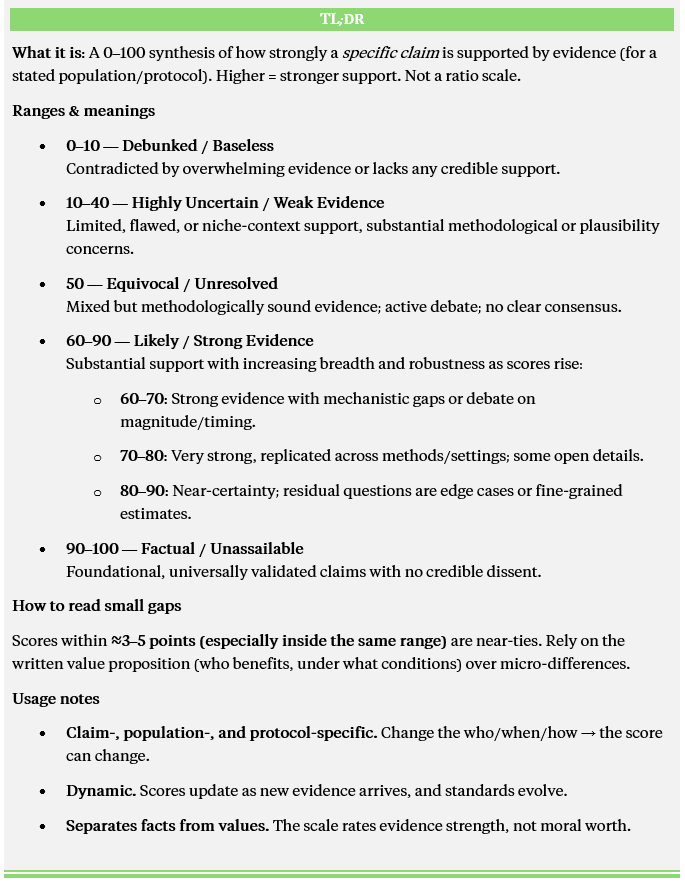
ETCS Score: 70/100 (Moderate-to-Strong Evidence)
Several RCTs in men show increases in serum testosterone, sperm count, and motility after 8–12 weeks.
Benefits most evident in men with low T or fertility challenges — not necessarily in healthy, optimized individuals.
Bottom line: May support hormonal function, especially if you’re starting from sub-optimal.
Claim 4: Ashwagandha Enhances Strength, Muscle Mass, and Recovery
ETCS Score: 68/100 (Moderate Evidence)
A few well-controlled studies show improved strength, VO2 max, and muscle recovery in resistance-trained individuals.
Gains are modest but real, possibly due to lower cortisol and improved adaptation to training stress.
Bottom line: Not creatine-level gains, but a helpful background ally for recovery and stress resilience.
Claim 5: Ashwagandha Is Safe for Long-Term Use
ETCS Score: 80/100 (Strong Evidence)
Most studies report no serious side effects at doses of 300–600 mg/day (standardized to ≥5% withanolides).
Occasional reports of GI upset or drowsiness.
Very few known interactions, though caution is warranted for thyroid disorders and sedative medications.
Bottom line: Solid safety profile with centuries of traditional use backing it up.
Final Verdict
Is Ashwagandha extract worth it? If you’re looking for a natural buffer against chronic stress, better sleep, and mild performance gains, yes. It’s not flashy — it’s foundational. The kind of supplement that works quietly, steadily, and cumulatively over time.
Final ETCS Score for Ashwagandha Extract: 76/100 (Strong evidence, calming effects, low risk. A rare modern classic.)
Here’s a quick ETCS breakdown → full explanation here. Hat tip to George Michaelson for encouraging me to clarify the model.